by Karin Childress-Wiley Chief Strategy & Growth Officer, FourBlock
Hollywood isn’t competing with Hollywood anymore.
It’s competing with a 22-year-old with a smartphone, a former infantry officer running a YouTube channel, and a creator collective operating out of a Discord server.
That’s not a metaphor. That’s the market.
MrBeast generates more engagement than major networks. TikTok creators influence purchasing decisions faster than traditional ad campaigns. And streaming platforms - Disney, Hulu, Comcast's Peacock - are now fighting not just for subscribers, but for attention in an economy where content is infinite.
Which means the real constraint isn’t content. It’s people who know how to make content matter.
The Shift No One Is Fully Designing For
Reed Hastings, co-founder of Netflix once said: “We compete with sleep.”
That wasn’t about entertainment. It was about attention. And attention is now the most competitive labor market in the world. Every company is a media company. Every brand is a storyteller. Every product needs distribution through content.
But here’s the disconnect: We built hiring systems for a world where:
- roles were stable
- career paths were linear
- content was periodic
None of those things are true anymore.
What Work Actually Looks Like Now
The modern media workforce doesn’t sit neatly inside job descriptions.
A single “marketing” role today might require:
- analytics fluency (to understand performance)
- creative instinct (to shape narrative)
- platform knowledge (TikTok vs YouTube vs streaming)
- speed (hours, not weeks)
And increasingly comfort with AI as a co-creator
Sam Altman, CEO of OpenAI has said: “AI will be the most powerful tool for human creativity ever created.”
That’s already happening.
Editors are using AI to cut content faster. Marketers are testing campaigns in minutes. Writers are generating drafts at scale. So the question is no longer: “Can you create?” It’s “Can you direct, refine, and execute in a system where creation is abundant?”
The Talent Problem (That Isn’t a Talent Problem)
Employers say they can’t find talent. But look closer. What they mean is:
- they can’t find people who are ready on day one
- they can’t find people who understand how the industry actually works now
- they can’t find people who can operate in ambiguity
That’s not a supply issue. That’s a pathway issue.
Because there is a large population of talent that already operates this way. We just don’t call them “creative professionals.”

Creator: Lance Cpl. Orlanys Diaz Figueroa| Credit: 2nd Marine Aircraft Wing
The Veteran Signal No One Is Talking About
Inside the military, there are people:
- running real-time communication operations
- producing visual and digital content in high-stakes environments
- managing distributed teams across time zones
- making decisions with incomplete information and no margin for error
That is not theoretical alignment. That is operational reality in the creative economy.
But here’s the gap: A hiring manager at a media company doesn’t see: “Platoon Leader” and think “Content Operations Lead”. They don’t see: “Information Operations” and think “Digital Strategy”. And frankly, the military person doesn't see themselves in the content role either.
So the talent gets filtered out. Not because it lacks capability, but because it lacks translation.
As one former Google executive put it in a workforce discussion: “The best talent is often invisible to the systems designed to find it.”
The Creator Economy Already Solved This (Quietly)
Here’s the irony: The creator economy doesn’t have this problem. No one asks a YouTuber for a degree. No one asks a TikTok strategist for a resume.
It’s a pure skills-and-outcomes market. Meanwhile, enterprise hiring is still catching up.
What Leading Companies Are Starting to Realize
Media companies like Disney, Comcast, and Bloomberg are investing heavily in streaming, data, and AI to improve efficiency, personalization, and speed and this is pushing them to reorganize teams and rethink how creative and technical roles work together.
They are starting to ask:
- How do we find people who can operate across creative + technical + operational domains?
- How do we reduce time from idea to execution?
- How do we build teams that can move at the speed of platforms?
Because in this environment, speed is not a nice-to-have. It is the advantage.

What Employers Actually Need (But Rarely Say Out Loud)
They need people who:
- don’t wait for perfect clarity
- can execute before the playbook exists
- can lead without a defined structure
- can learn platforms faster than they change
In other words: They need people who are comfortable operating before the job is fully defined.
That’s not a traditional candidate profile. But it is a very familiar one in the military.
Why Industry Pathways Matter More Than Ever
You can’t solve this with job postings.
You solve it by:
- showing how skills translate in real time
- giving candidates exposure to how work actually happens
- connecting employers to talent before filters eliminate them
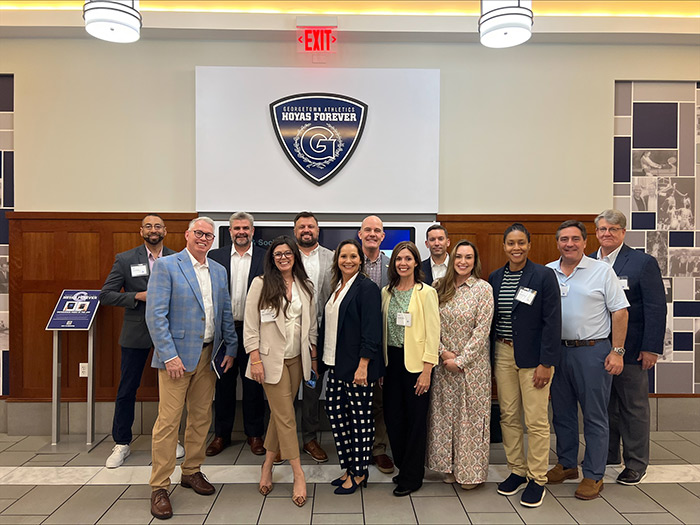
That’s the purpose of our FourBlock Industry Pathways events
Not to explain industries. But to demystify them, accelerate alignment and give real world connections to leaders making these decision now.
The future of work in the creative economy will be defined by the companies that recognize something early:
The most valuable talent isn’t always the most obvious.
Content is infinite. Attention is scarce.
And talent, the kind that can navigate both, is the real differentiator.
The question isn’t whether that talent exists. It’s whether we’re willing to rethink how we find it.
Bottom Line: Veterans are not adjacent to the creative economy. They are already built for it.
Join FourBlock and leading media industry employers for an Industry Pathways event to explore how the creative economy is evolving, what skills actually matter now, and how veterans can translate their experience into high-impact roles across media, marketing, and digital content.
Veterans attend. Employers register as a breakout room host to share your company story.
Learn more and register: https://www.fourblock.org/eventspage/industry-pathways-creative-economy-media-marketing-digital-content-2026-04-07?hsLang=en
FourBlock, led by Mike Abrams is a national nonprofit organization that prepares transitioning service members and military spouses for meaningful careers in the civilian workforce. Through industry-aligned programs, mentorship, and employer partnerships, FourBlock bridges the gap between military experience and corporate success—helping veterans translate their leadership, adaptability, and mission-driven mindset into high-impact roles across sectors.
Karin Childress-Wiley is a Military Spouse and strategy leader dedicated to advancing veteran career outcomes through innovative workforce strategies and cross-sector partnerships. At FourBlock, she works at the intersection of talent, industry, and impact, helping organizations rethink how they identify, develop, and retain high-performing talent in a rapidly evolving workforce.